
Drawn from Life
Life Drawing versus Figure Drawing

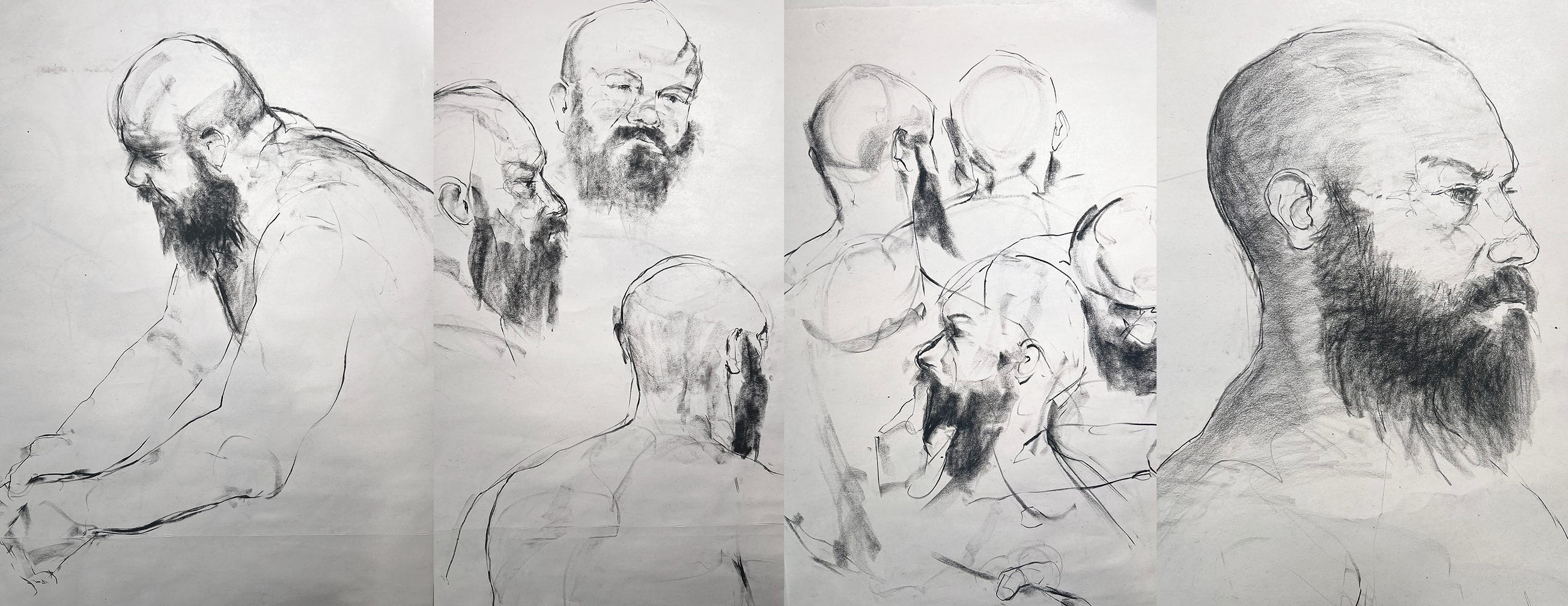
This week in the Nicolaides Book Study Club, we are exploring Chapter 2. If you would like to follow along with the exercises and prompts, as well as receive feedback on your drawings, consider becoming a paid subscriber here:
This week on YouTube I published a short video about my process of drawing a portrait study, if you haven’t watched it, you can catch up with that here:
🎥: Drawn from Life - A Portrait Sketch
Life Drawing vs Figure Drawing?
Learning figure drawing online today is all too often a case of learning to draw the figure in a mediated, or at least one-step-removed sort of way, because the simple fact is we can’t really study the live model online. It is one thing for an artist to use photos as tools and references in studio work, but another thing for a beginner to learn how to draw from photos only.
I wrote in this article about the main differences between drawing from a photo reference and drawing from life:
But in today’s post I wanted to unpack this a little further, because the distinctions between the two are causing much of what was once learned in person to be re-framed and re-defined, online.
Most readers here get it, and are currently attending life drawing sessions, and to be certain any subscriber to this Newsletter has an appreciation for what “life drawing” is versus “figure drawing”.
I’m slowly starting to think that much of the figure drawing tutorials across the internet are really lessons in designing and constructing the human figure. I recognize this probably more so than other fine artists might because I have a background in exactly the area that is setting the tone for so much of the content, when it comes to figure drawing: animation, comic art and character design. I studied animation, and worked for years as a concept artist in the industry. These disciplines are necessarily focused on design and construction, because their entire purpose is to produce universally recognised forms.
And life drawing is less about designing or constructing a figure in a universal sense, more about drawing what you see and experience in the moment. Thus learning to draw the figure from life obviously affords a very different experience and outcome, as well an opportunity to study very different aspects of the human form - things that are now described as too “abstract” or too “mysterious” for figure drawing. These aspects are only abstract because they are not present in a photo, and thus not easily described; it’s not easy to point to them, or teach them in a meaningful way using a photo reference.
However I was really struck the other day, when drawing from life, by the fact that these abstract or “refined” aspects of the figure are the very things that inform the most basic decision making in the moment, in the act of drawing, and that these decisions - like the tide - “if taken, lead on to fortune”, as the Poet once said.
In other words, by studying the non-figurative aspects of the model in person, you can make decisions in your drawing process that are much more exciting and way beyond any that you might make when simply designing or constructing the forms for accuracy or readability. You might discover new ways of drawing and observing, when you are not focused on the design and construction per se. These decisions can inform whether you draw lightly, or furiously; whether you decide to draw one section of the model only or the full pose; or even if you decide to draw one pose over on top of the other, creating a multi-faceted exploration of being, like one of my favorite figurative artists, David Hedderman does.
I personally think these decisions are the vital heartbeat of your artistic practice and no matter the end goal in terms of a career, or a passion, giving yourself the opportunity to explore these decisions can only be helpful to you.
If you simply can’t get to a life drawing session, there is a world around you that is asking to be drawn. You don’t even have to draw the figure to get the full benefit of drawing from life. Draw a still life. Draw yourself. Draw outside. It will give you the same experience as drawing the model from life and will allow you to understand and develop your own drawing process in a way that studying photos can’t.
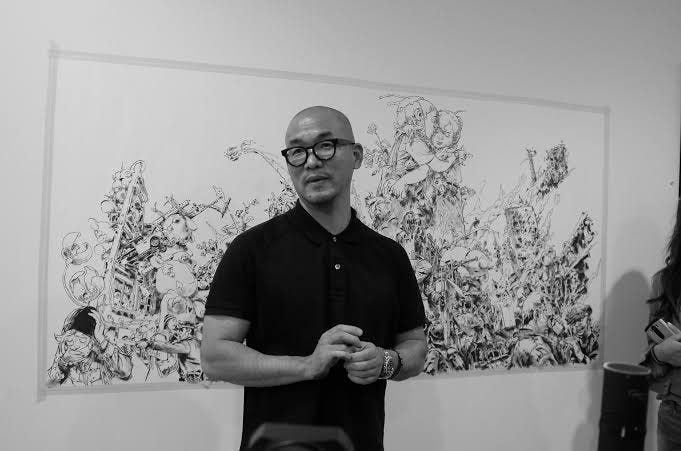
This is what Nicolaides calls having an “experience of your subject”: a real-life, in-person contact with the thing you are drawing. I am reminded now of one other artist who singled out this “experience” as being the first and foremost thing that a beginner should concern themselves with. And it is very apt to mention him here: Kim Jung Gi is undoubtedly an animation and concept artist icon, someone whose legacy to the animation industry, and whose inspiration, is unmatched. He was once asked what is the best advice he could give beginners, and his first answer was “experience” - by that he meant observing and drawing things that you have firsthand experience of. He said it’s fine to draw from photo reference if that’s all you have, but to be able to really develop your art, it’s important to observe and experience things firsthand. Always be observing and drawing the world around you. From there you will be able to draw from imagination
It’s the same with figure drawing - it’s fine, and useful, and sometimes important to draw from photo reference. But broadening your understanding of this art practice by drawing from life as well, by listening to the abstract or mysterious, it will help you to develop and grow into any artist you want to be, and will only deepen your understanding of what Figure Drawing is.
I hope that this helps you in your drawing practice and gives you some inspiration for how to develop your work.
Thanks for reading, wishing you a wonderful week
Siobhan
❤️
I have started reading the book of Nicolaides. In the first chapter, he has set up a table where we should do a blind contour for 30 minutes 5 times. Then, he wants us to draw moving subjects for half an hour combined with blind contour drawings. He thinks sketching, which I really enjoy, is a poor way of drawing. Instead, he asks us do drawings of moving subjects fast. No surprise. In the table he wants us to do 260 sketches of moving subjects and about 10 contour drawings, some for half an hour and some for an hour. Besides, we shall not start chapter 2 before we have done the exercises in chapter 1. This is why I have never used his book to learn how to draw. He's simply too strict and drawing for me is a hobby, which gives me great joy. However, I don't expect anyone to pay anything for my "art".
What do you recommend? Doing all the exercises he wants us to do? Isn't it enough to draw from life, especially since art will only be a hobby for me.
I have the book of Nicolaides from the library - confess I keep renewing & I've struggled to even get started on it - I've read the forward. BUT I'm convinced there's merit in following it, not least when I look at Siobhan's beautiful drawings which is what lead me here, ... not quite in a 'if I read it & do the work maybe I too will be able to draw that good'; though secretly yes ;-)
I'm looking to other places to do sketching movement - people in cafes, on bus - and I'm only just starting out on this. I'm taking a still life course so there may be a lot of fruit life models in my submissions.