Draw the Feeling
How to See it, and How to Respond

Our Book Study Club continues, we are working through Kimon Nicolaides’ “The Natural Way to Draw” and if you’d like to work through the chapters with me, including drawing critiques and feedback on the exercises, then sign up below:
Last week, I posted a video on YouTube about how to draw the feeling of a pose, if you haven’t seen it, you can catch it here:
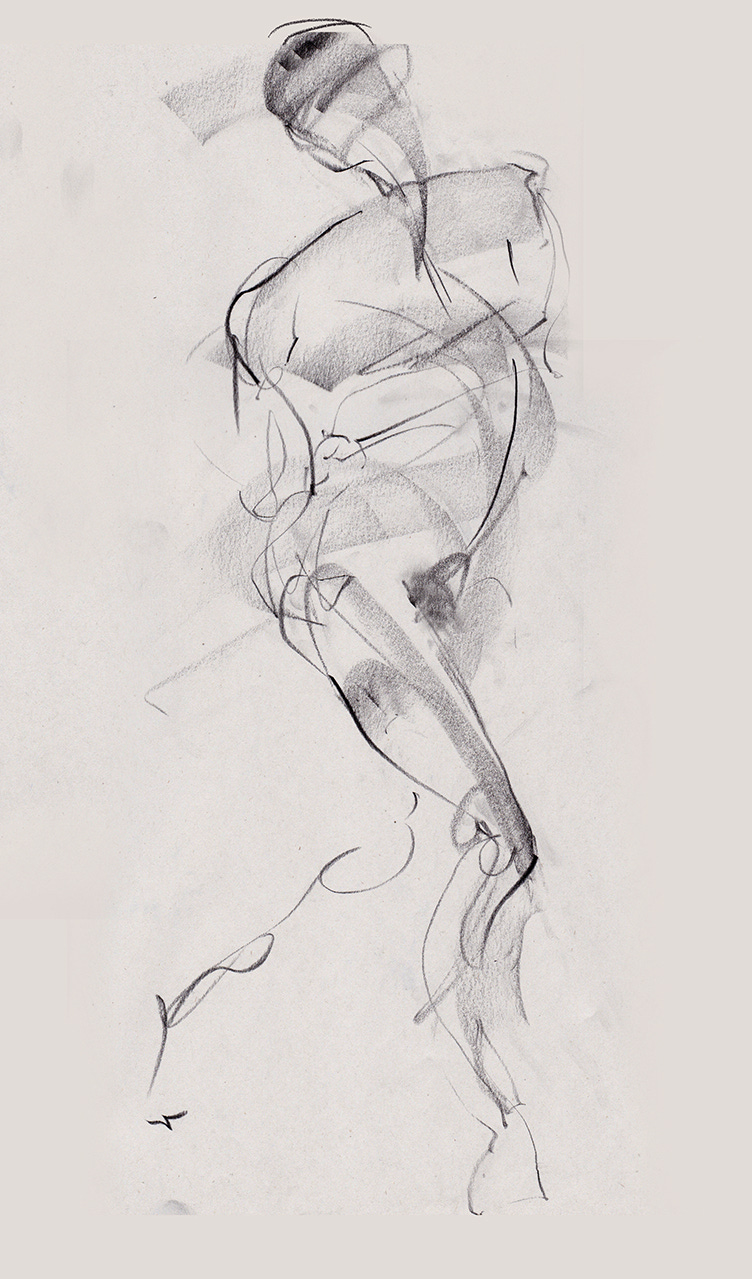
The main point I wanted to make, and I think it’s worth posting here as well is this: particularly when it comes to short gesture drawings it’s really key to look at the pose as a whole.
When you see the pose as a whole, unified and cohesive unit, that’s when you can more easily see the “feeling”: the character or quality that defines this overall pose. Since the feeling is the non-physical aspect of the figure - it therefore makes sense that you wouldn’t try to draw that with basic shapes.
It is not necessary or useful to draw anatomical shapes accurately.
It is not necessary or useful to draw simplified “symbolic” shapes and forms
Drawing with basic shapes develops in you a completely different skillset than what a true gesture drawing will do. It’s a separate exercise entirely.
Drawing the figure as a unified, cohesive expression in itself (ie., the feeling of the pose) requires you to draw in a markedly different way to how you would normally “construct” the figure. This is where specific drawing techniques like continuous line, or scribble drawing or circular drawing come into play because they work in much the same way that automatic drawing works: they work to get you out of an analytical way of thinking and into a creative, intuitive and responsive way of thinking. This is the key to gesture drawing. Once you get comfortable making drawings that are not accurate constructions, that are not overly simplified or symbolic, and that bear no resemblance to the figure in a literal sense, then you can drop these techniques and rely on your own true natural response.
Try to see the pose as a whole unit: that is the “feeling” of the pose. And, try to respond to that impression with responsive marks. Getting these two concepts into your approach to drawing will completely change the way you draw and the way you understand the figure as a subject.
Gesture drawing is a way to develop your singular, unique signature, and that signature is what you bring into your longer drawings, the more finished drawings where you are focusing on accuracy and realism. Your signature will infuse your larger work with a flavor of that others will say is indescribable. But to you, it will just simply be the way you express the feeling that you see.